...
| Оглавление | ||||
|---|---|---|---|---|
|
Basic
Inside this tab you can see several sections - basic options, pricing , creatives and commission
First, you have to fill basic fields:
and creatives
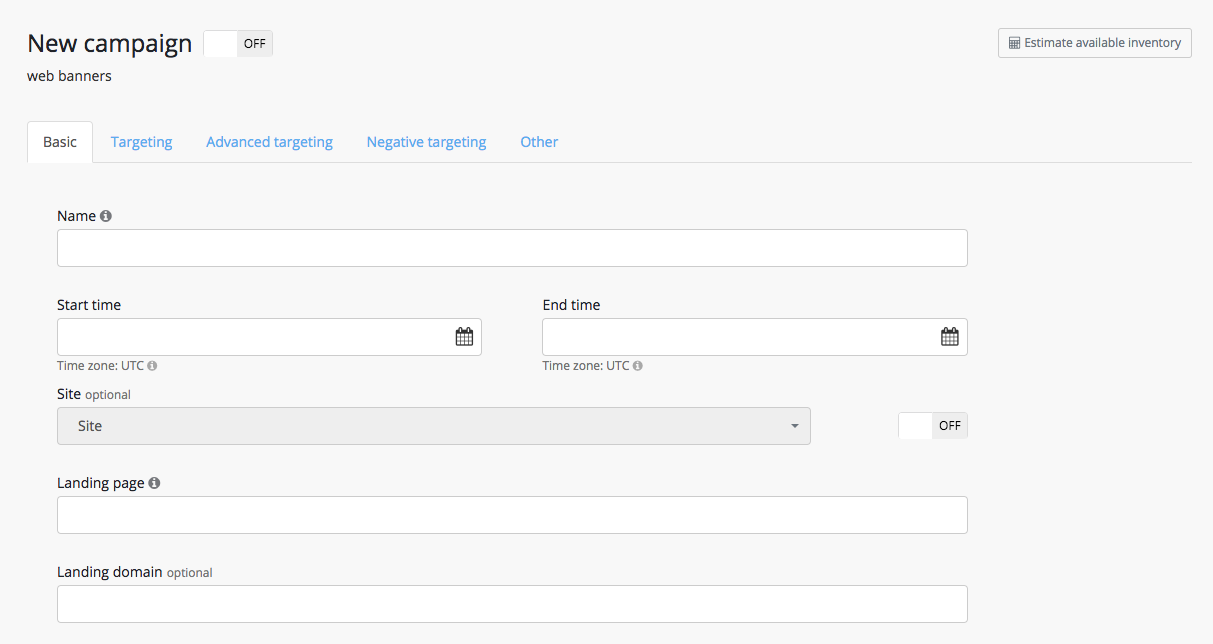
«Name» - enter the campaign name. The name must be entered in Latin alphabet with no spaces, in order to use it in UTM-tag if needed.
«Start Time» - «End Time» - enter the campaign period. The campaign budget will be spread evenly over this timeframe.
«Site» - this field is for a dynamic retargeting. For more information: see Retargetingsee Retargeting.
«Landing page» - enter the URL of the landing page (direct or through a tracking system).
«Landing domain» - enter the landing domain (optional).Second, you have to adjust the budget:
Pricing
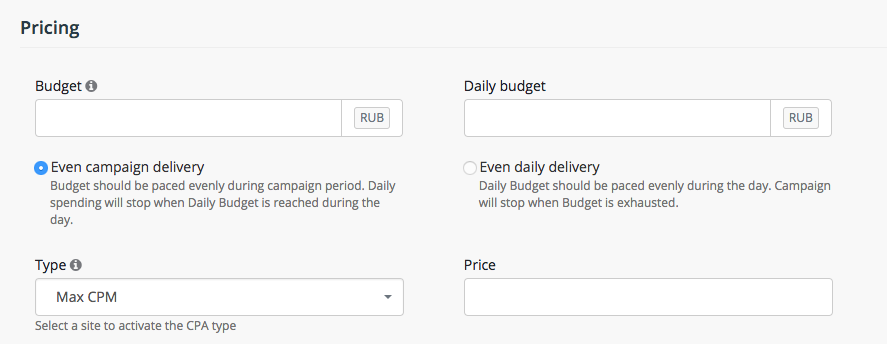
«Budget» - enter the budget of the campaign (excluding tax).
«Daily Budget» - a daily budget limit for a campaign (excluding tax).
«Even daily/Even campaign delivery» - choosing one of those options, you will have your budget spent in different ways. With With even campaign delivery, your budget is paced evenly during the campaign period, and with daily spending, your campaign stops when Daily Budget is reached during the day.
«Type» - choose one of the following options:
Target CPC – this option runs the Click Predictor algorithm, which will keep the cost of clicks equal to or lower than the value in the «Price» field to the extent
possiblepossible. This option does not work in all cases because it depends on many factors: creative materials, client’s business area, etc.
Creatives
For Banners Campaign you can attach
standartstandard, third-party or dynamic types of previously uploaded creatives, by using "creatives" field and choosing from your list of previously
uploaduploaded creatives. To see, how to upload and add creatives to your advertiser account, see Creatives
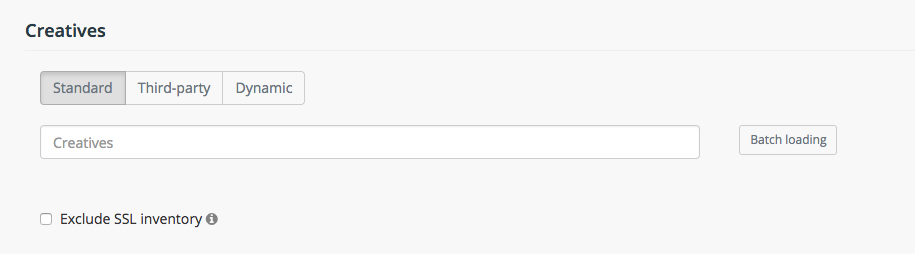
"StandartStandard" - graphical creatives (.png, .jpg, .gif etc.) and HTML5
"Third -rd party" - a tag that is delivering from an external server - see Third-party tags
"Dynamic" - a tag that lets advertisers personalize every ad impression they serve by featuring products or content recently viewed or otherwise relevant to the user.
For Native campaigns you can upload your native creatives:
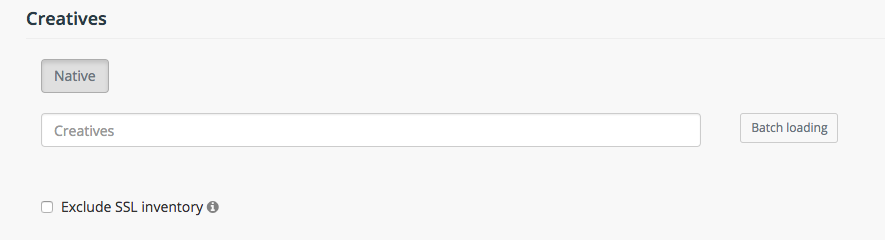
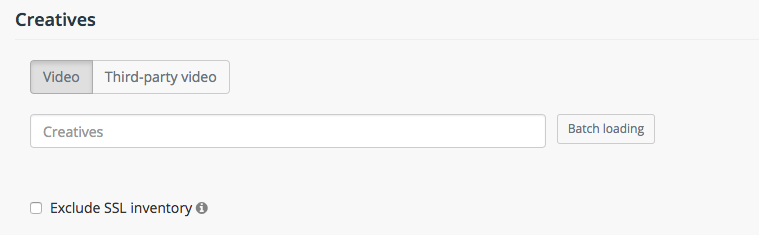
Inallcampaigntypesyoucanchoose to Exclude SSL inventory, in order to prevent pixels without HTTPS support from loading on HTTPS websites.
Targeting
In this section we can set various rules for the campaign spending.
Geo
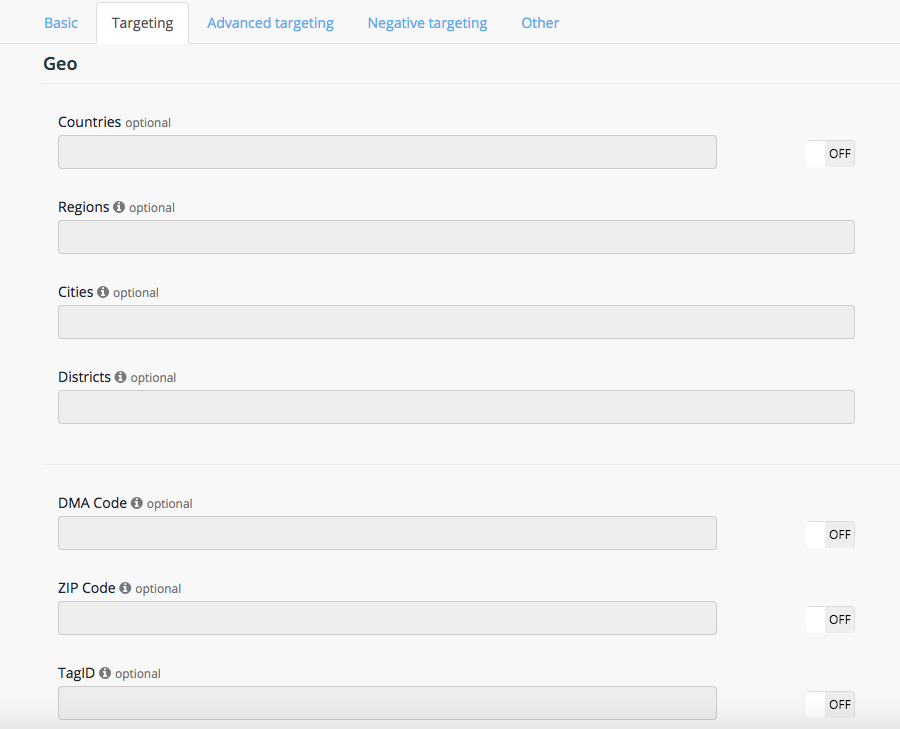
«Countries» - select the countries whose traffic which you would like to target in the campaign.
«Regions» - select the regions whose traffic which you would like to target in the campaign.
«Cities» - select the cities whose traffic which you would like to target in the campaign.
«Districts» - available one for only in Russia
«DMA code» - a drop-down list of DMA codes. Select the DMAs whose traffic you would like to target in the campaign. Available only for in US targeting.
«ZIP Code» - select the ZIP codes whose traffic you would like to target in the campaign. Available only for in US targeting.
«TagID»«Tag ID» - placement ID on publisher's website.And add some other rules:
Other
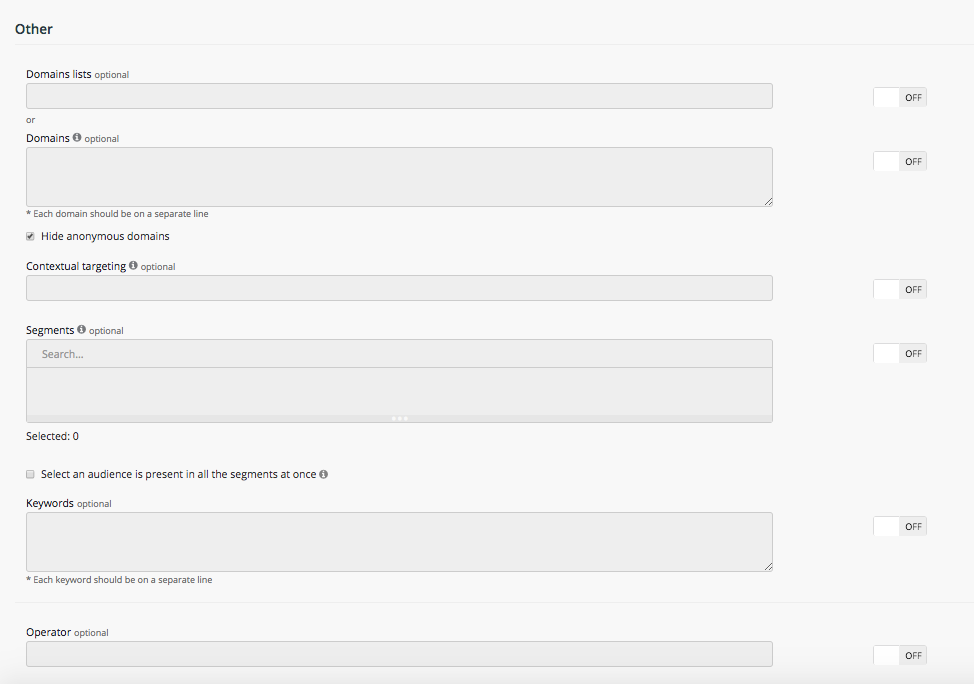
«Domains lists» - choose custom
domaindomains lists (default lists of theme-based Web sites are available). More information about creating a domain list
cancan be found in the section: Domains lists.
«Domains» -
select the domains whose traffic you would like to target in the campaign. The list of domains can be found under
thethe link
If the checkbox "
HideDon’t target anonymous
domainsinventory" is active, the campaign will be broadcasted only on opened domains.
«Contextual targeting» - select a context of domains where you are going to launch your campaigns
«Segments» «Segments» - selecting specific segments for publishing:
Inner segments (retargeting) – are to be created manually. Placement of the pixel on a client’s web site website is required. Learn mote more in section: Retargeting.
External segments - the same interests or demographics. The use of these segments increases the CPM to the value that is specified after the name of the segment. Learn mote Learn more in section: DMP.
If the checkbox "Select an audience is present in all the segments at once " is active, your creatives will be shown to those who are present in all the segments selected at once.
«Is expandable-only» - select a context of domains where you are going to launch your campaigns
«Keywords» «Keywords» - select the keywords , to which your targeting target audience corresponds.
«Operator» «Carrier» - select the mobile operator, on which you want your audience carrier to be targeted on.You can also add time targeting and frequency capping:
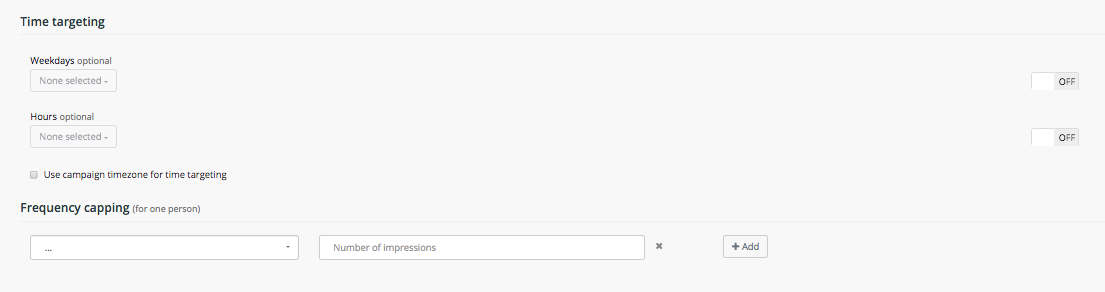
Time targeting
Choose desired serving weekdays and hours, and . Also you are able to choose number of impressions per hour, day, week or month.
Advanced Targeting
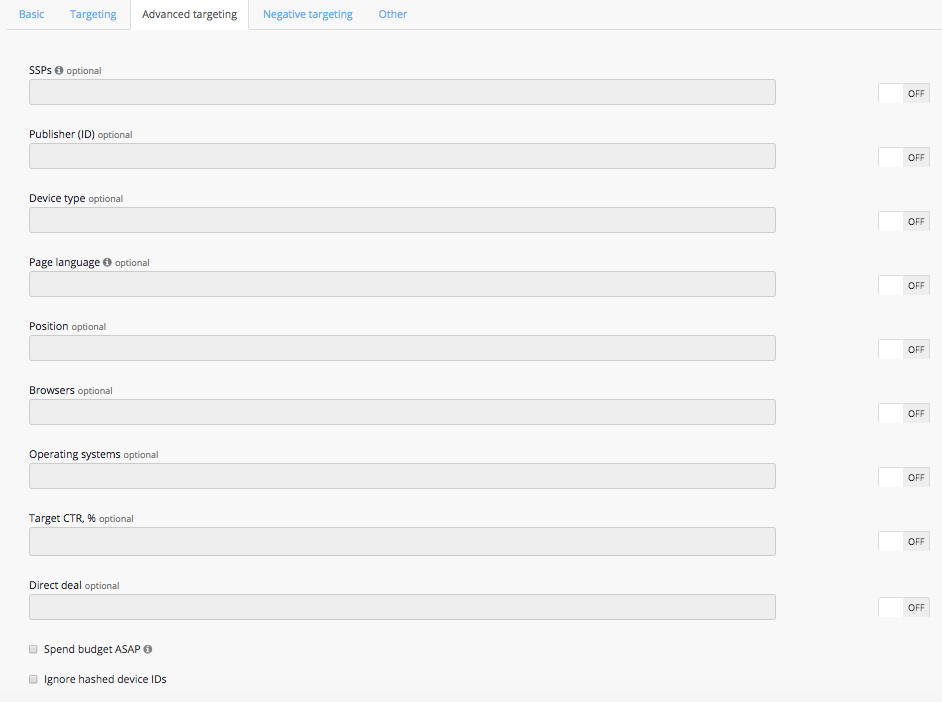
«SSPs» - select the SSP on which you would like to
broadcast thebroadcast your campaign. (by default, all the SSPs are selected).
«Publisher ID» - select the publisher on which you would want
to to broadcastto broadcast your campaign.
«Device«Device type» - select the type of device you would like to target.
«Page«Page language» - select the page display language. This information is provided by SSP. This information is not available for all websites in the network, so setting a target may significantly reduce the amount of available traffic.
«Position»«Position» - select the position of the banner on the display page. This information is provided by SSP. This target drastically reduces the amount of available traffic as not every SSP provides this information.
«Browsers» -
Select theselect browsers
thethat campaign will target.
«Operating systems» - select the operating systems to target
for the campaign.
«Browsers»«Operating systems versions» -
Select the browsers the campaign willselect the operating systems versions to target.
«Target«Target CTR, %» - use this field to set the target CTR. Using this only makes sense when there is an agreement with the client on this value. In all other cases, it is better to use Target CPC in the «Pricing» section.
«Minimal CTR, %» - use this field to set the minimal CTR. Using this only makes sense when there is an agreement with the client on this value.
«Direct deal» - use this field to to insert direct deal ID for desirable.

«Ads.txt status» - target your campaigns to a specific Ads.txt status.
If the checkbox "Spend budget ASAP" is active, your campaign will be displayed with maximum possible speed within a specified target and budget. Specify advertisement budget to avoid overspending.
If the checkbox "Don’t target hashed device IDs" is active, your campaign will be displayed only to a hashed device IDs.
If the checkbox "Full screen only" is active, your campaign will be displayed to a full screen only ad sizes.
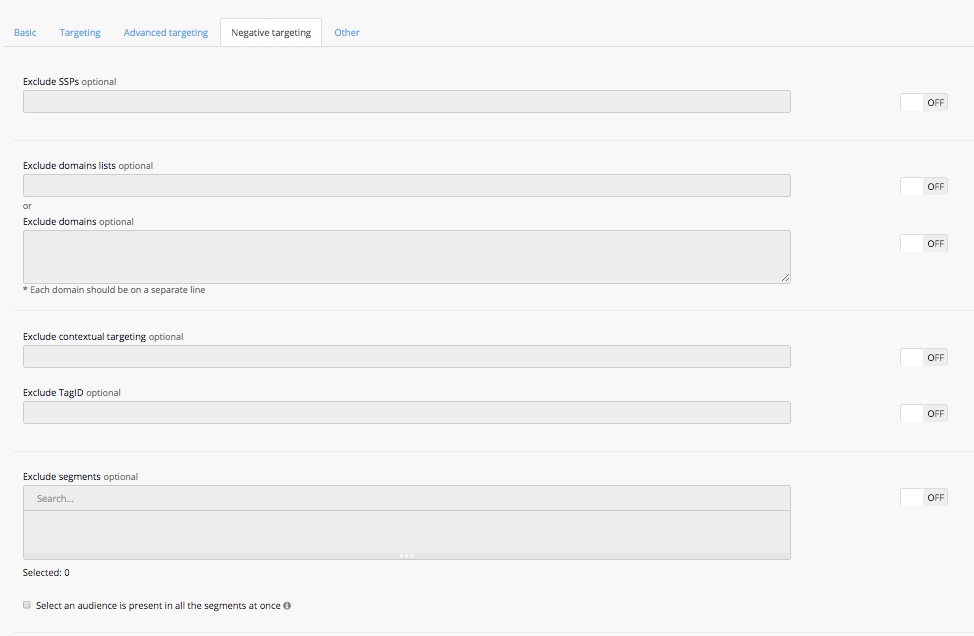
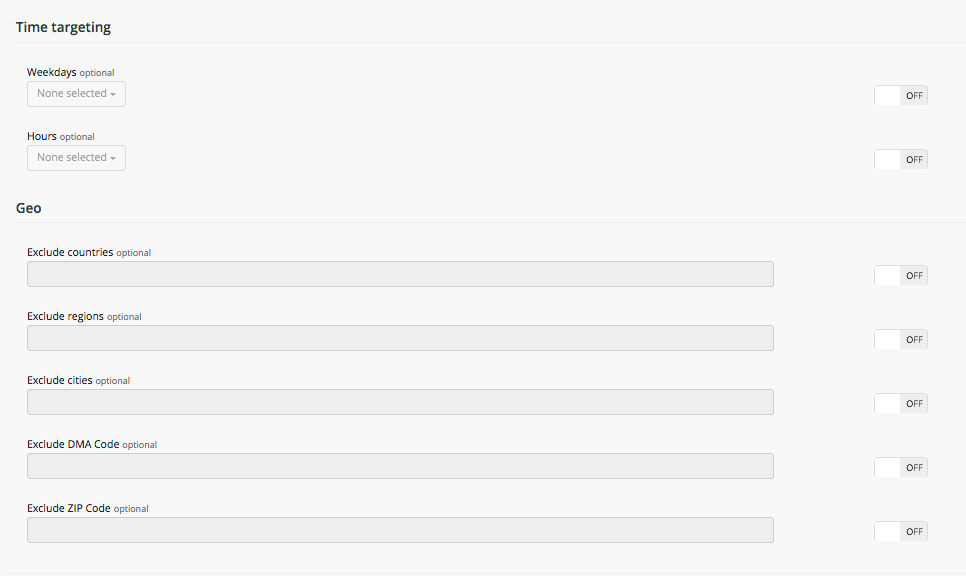
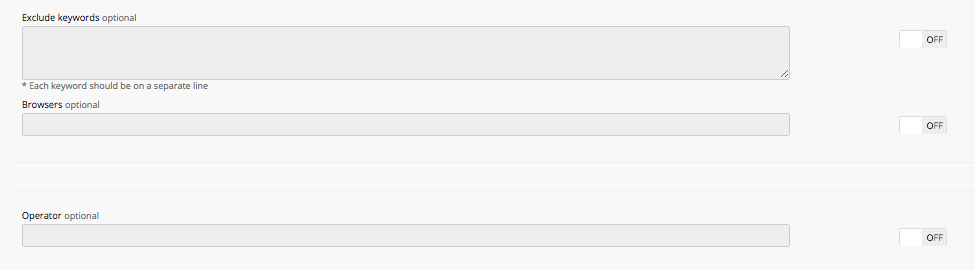
Negative Targeting
Other options
On the "Other" tab you can set some additional rules:
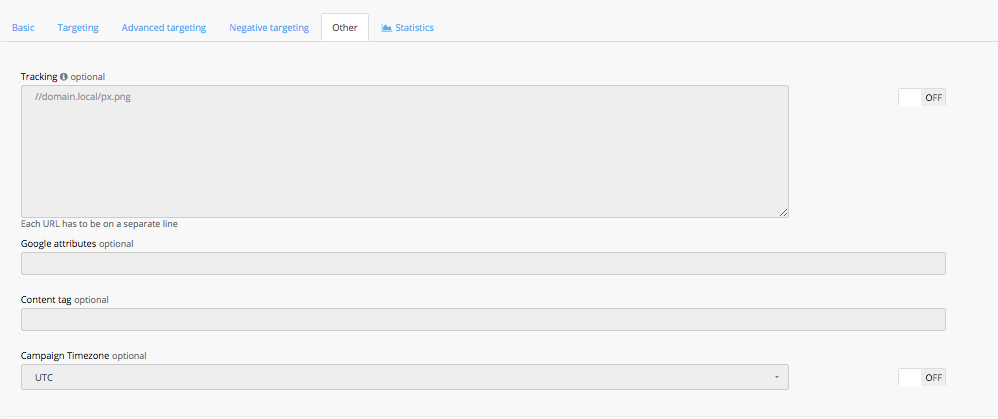
«Tracking» - you can insert your tracking pixel URL into this field to track impressions (drop "httpHTTP" from your tracking pixel URL and insert it into the field).
«Google attributes» - insert Google attribute you want to track. You can see the drop-down list of available attributes inside the field.
«Content tag» - insert content tags you want to target.
«Campaign timezone» - set the timezone time zone for your campaign to reflect in the reports.